The Office of the Public Independent has taken part in the relaunch of the Africa Ombudsman Research Centre (AORC). A delegation led by the Public Independent Conciliator, Mme Telelen Dorothy Motaze was present at the Relaunch and Training programme organized by AORC from the 23rd to 26th March 2026 in Durban, South Africa.
The Public Independent Conciliator, Mme Telelen Dorothy Atabong spouse Motaze amongst other dignitaries during the family photo of the re-launch of AORC
Held at the University of KwaZulu-Natal Durban South Africa, the re-launch brought together ombudsman institutions, governance experts, academics and international partners from across Africa. Over the course of an intensive four-day seminar, the programme moved beyond formality into substance creating a dynamic platform for reflection, learning and strategic engagement on the future of governance in Africa.
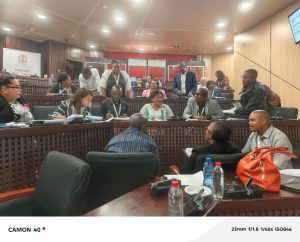
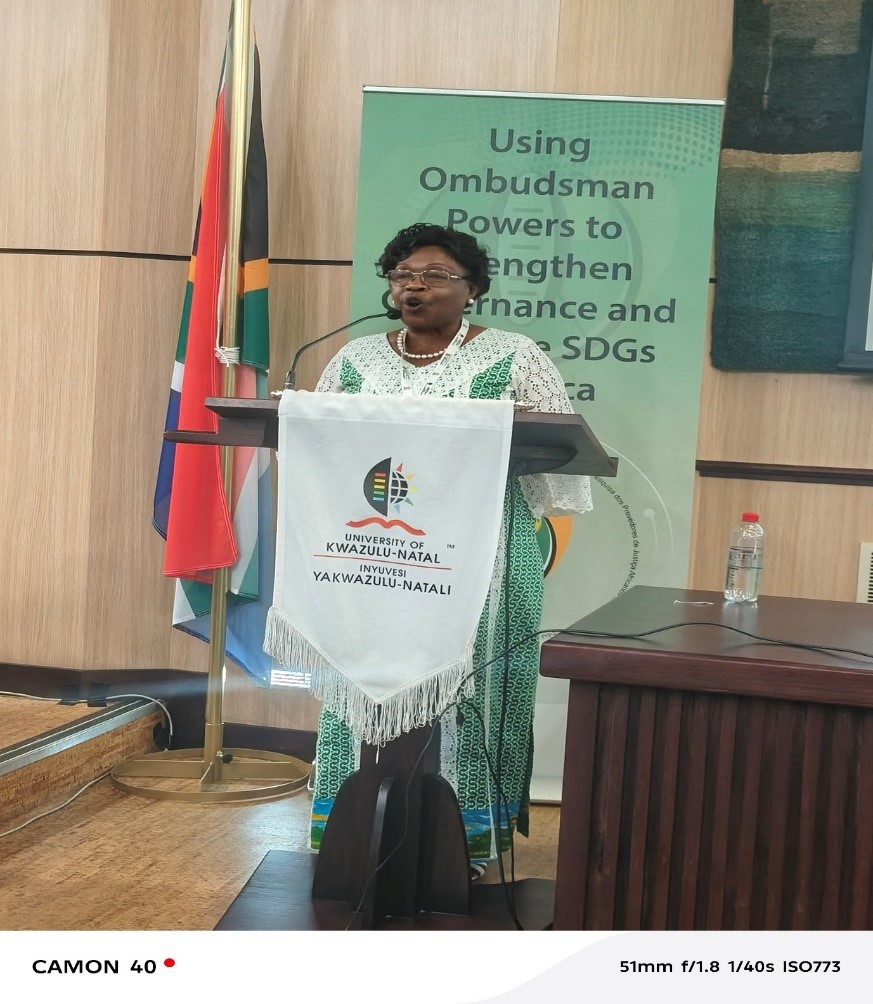
The Public Independent Conciliator, Mme Telelen Dorothy Atabong spouse Motaze with other attendees during a working session
At its core, the seminar was driven by a clear and urgent mission: to strengthen cooperation among ombudsman institutions, build institutional capacity and reinforce the role of oversight bodies in advancing good governance and the Sustainable Development Goals within the framework of Agenda 2063. Yet, what emerged was far more profound a shared realization that Africa’s governance challenges demand not only stronger institutions but more connected, innovative and responsive ones.
Key voices such as Adv Kholeka Gcaleka, Public protector of South Africa, Africa ombudsman Reseach Centre Board chairperson underscored the indispensable role of ombudsman institutions in promoting transparency and accountability within public administration. Her reflections, alongside contributions from other governance leaders, reinforced a central truth: that the strength of any democratic system lies not merely in its structures, but in the credibility and effectiveness of its oversight mechanisms.
The seminar explored critical themes shaping modern governance, ethical leadership, human rights protection, anti-corruption strategies and the growing relevance of digital innovation in public administration. Discussions revealed that ombudsman institutions are uniquely positioned to detect systemic failures, amplify citizens’ voices, and influence reforms through evidence-based recommendations. In an era where public trust in institutions is often fragile, this role is more vital than ever.
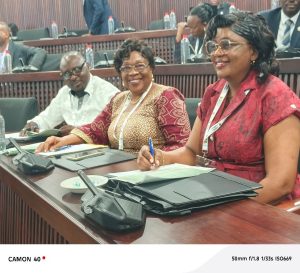
The three-man delegation of OPIC South-West Region led by the Public Independent Conciliator
A particularly defining moment was the contribution from Cameroon, where the Independent Conciliator of the South-West Region Public presented its mandate and operational approach. The presentation highlighted the institution’s role as a bridge between citizens and decentralized authorities, promoting administrative justice through mediation, dialogue and grassroots engagement. It became clear that such institutions are not only mechanisms of redress but instruments of preventive governance capable of transforming complaints into catalysts for reform.
Beyond the formal sessions, the seminar fostered meaningful exchanges among participants, enabling the sharing of experiences, best practices and innovative approaches to common challenges. These interactions laid the groundwork for stronger professional networks and future collaboration among African ombudsman institutions.
The re-launch of the AORC itself stood as a symbol of renewal and ambition a reaffirmation of Africa’s resolve to build institutions that are not only functional, but impactful. Supported by the Centre is poised to serve as a continental hub for research, training and knowledge production, driving forward the agenda of accountability and good governance.
For the delegation from Cameroon, the experience was both enriching and strategic. The insights gained and partnerships established are expected to significantly enhance the work of the Public Independent Conciliator, particularly in strengthening administrative justice and improving services delivery within decentralized governance systems.
As the echoes of the Durban seminar fade, one message remains clear: the future of governance in Africa will be shaped not only by policies and institutions but by the strength of collaboration, the courage to innovate and the unwavering commitment to serve the citizen. In this renewed vision, ombudsman institutions stand not at the margins, but at the very heart of Africa’s democratic evolution.